The Theology and Political Economy of “Sorry”
The viral explosion of Daily Prothom Alo’s bold red “স্যরি” graphic across Bangladeshi social media captured a rare cultural moment where a simple word became an arena for heavy ideological debate. Presented by the country’s leading daily as a heartwarming lifestyle commentary on the healing power of everyday apologies, the piece read like a modern secular sermon. It encouraged readers to shed their pride, mend broken relationships, and embrace the emotional superpower of admitting fault. Yet, the public’s swift transformation of this earnest message into a widespread meme reveals a deep-seated cultural cynicism toward the mechanics of moral absolution when they are detached from material reality.
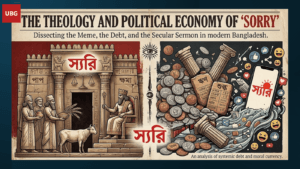
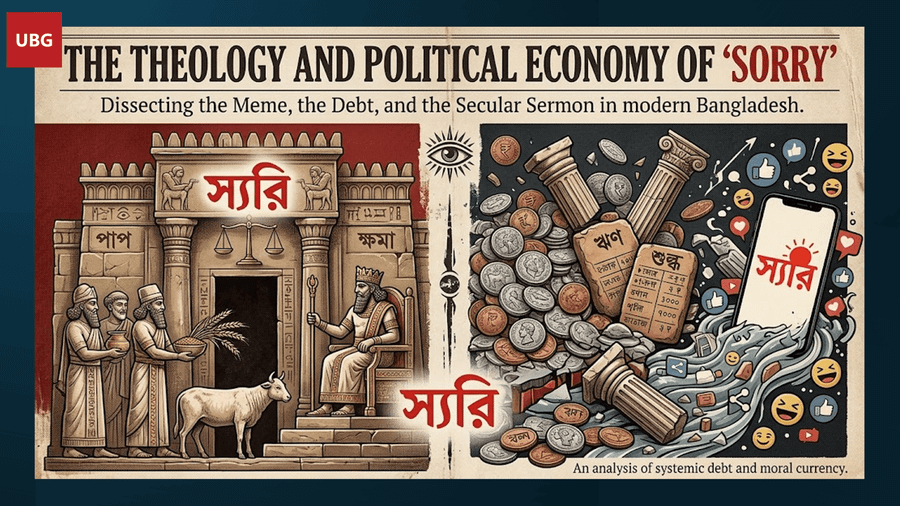
Beneath its polished self-help framing, the editorial attempted to deploy an ancient theological architecture to smooth over modern social friction. In classical theological systems, confession and repentance were designed to break the human ego before a sovereign authority and restore moral equilibrium. By elevating “sorry” into a secular virtue, the essay framed emotional vulnerability as a universal cure for interpersonal conflict. However, when an apology is decoupled from concrete structural change, it shifts from an act of genuine repentance into a secular indulgence. It offers the speaker a cheap token of moral absolution while leaving the fundamental imbalance between the wrongdoer and the victim completely untouched.
Viewed through the lens of political economy, the word “sorry” functions less as a tool of emotional healing and more as an instrument of asymmetric power. In an ancient temple economy, a spiritual debt could never be settled by words alone. True repentance required restitution, such as returning stolen property, offering sacrifices, or paying steep financial penalties to restore the community’s shared balance sheet. Modern institutions and elites, by contrast, favor the word “sorry” precisely because it costs zero capital. It converts heavy material debts, such as unpaid labor, broken institutional promises, and systemic failures, into purely emotional transactions. It allows the powerful to claim moral high ground through magnanimous language without redistributing wealth, relinquishing power, or offering tangible compensation.
The relentless meming of the Prothom Alo graphic by the Bangladeshi public is an intuitive rejection of this cheap grace. By attaching the bold red text to everyday frustrations ranging from persistent traffic jams and rolling blackouts to unfulfilled political rhetoric, social media users exposed the stark reality gap between linguistic posturing and actual accountability. The public recognized that an apology without restitution is merely public relations. In turning the secular sermon into a punchline, the public refused to sign off on a fraudulent audit of social power, signaling that some debts cannot be erased by a single word on newsprint.