The Potted Plant Syndrome: Why “Quality of Life” Emigration is an Ontological Fraud
For decades, we have been fed a comforting, high-gloss narrative by travel journalists, lifestyle columnists, and digital nomad influencers: If you are unhappy, stuck, or unfulfilled, pack your bags. Emigrate. Optimize your geography. Seek a better quality of life.
We are told that moving to a new country with lower taxes, a trendier café culture, faster internet, or a better weather score is the ultimate act of self-actualization. But if you step back and look at the history of human migration—and examine the psychological profile of those who preach this gospel—a startling truth emerges.
Modern lifestyle emigration is not an act of freedom. It is an ontological contradiction.
The Potted Plant Fallacy: Soil, Climate, and Roots
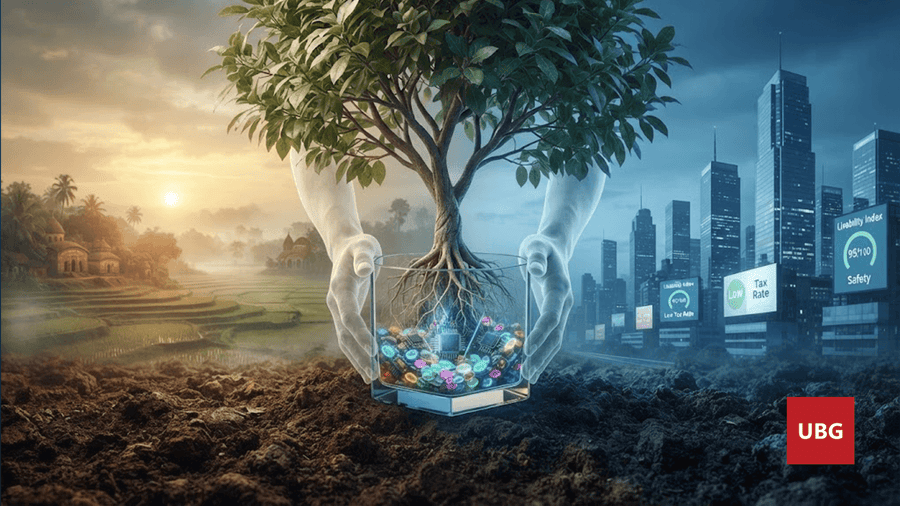
In biology, we understand that a plant’s existence is inextricably bound to a strict triad: climate, soil, and roots. A plant does not evaluate its home by the “efficiency” of the wind or the tax rate of the next forest over. Its roots have evolved to metabolize a specific chemistry, shaped by the dead things, minerals, and microorganisms that came before it.
When you tear a mature plant out of its earth and shove it into a foreign pot just because the weather looks better on paper, you induce severe transplant shock.
Yet, modern technocrats treat human beings like modular houseplants that can be swapped from London to Bali to Lisbon without consequence. They assume a human can be stripped of their local ecology—their shared language, historical landscape, generational accountability, and cultural grammar—and instantly thrive simply because the local currency is stronger or the coffee is cheaper.
Human beings are not software apps that can be redeployed on any hardware. When you sever a human from their soil, they do not find “optimization.” They enter a permanent state of survival, trying to grow in artificial soil, forever dependent on external props because the deep, unseen web of life was left behind.
The Genealogy of the Optimizer: Who Are These People?
Look closely at the class of commentators who pitch emigration as a lifestyle upgrade. Where do they come from?
More often than not, they are the generational products of displacement, corporate rootlessness, or cultural deracination. Because they have never experienced the quiet, heavy, anchoring power of a true home place—a place where your lineage is known, your history is embedded, and your community holds you accountable—they assume everyone else’s attachment to land is just a cage to escape from.
They have universalized their own internal homelessness. To someone with deep generational roots, a hometown is an archive of memory and duty. To a rootless modernist, a place is merely an asset portfolio.
Historically, mass migration was never about “lifestyle optimization.” It was driven by acute survival necessity: war, famine, plague, or persecution. And even then, the historic migrant carried a deep, psychological orientation toward return—the Odysseus pattern. They left to survive so that one day they could bring their bones back to the native soil.
The modern lifestyle migrant flips this entirely. They leave permanently not to escape annihilation, but to consume convenience, erasing the concept of return altogether.
The Great Omission: The Death of Social Legitimacy and Community
When you read the manifestos and guides written by the relocation class, look at what they measure. Their “quality of life” metrics are a sterile spreadsheet: GDP per capita, commute times, healthcare efficiency, and weather indexes.
Notice what is entirely missing from the ledger: Community ties and social legitimacy.
In a rooted community, social legitimacy is an unwritten currency earned through time, character, mutual obligation, and shared history. You are known. You are a son, a daughter, a neighbor, a steward.
When a modernist relocates for “quality of life,” they willingly flush their social legitimacy down the drain to become anonymous ghosts in a foreign machine. In the new land, they possess zero historical context and zero genuine community. To cope with this vacuum, they replace true belonging with transactional status—net worth, aesthetic backdrops, and consumer consumption. But transactional status cannot hold a human being when they are sick, grieving, or facing an existential crisis.
The truth is, these optimizers are ontologically unhappy people who lack community ties to begin with. They carry an internal void, a restless anxiety born of rootlessness. Rather than confronting their spiritual void, they misdiagnose it as a geographic problem. They think a better sunset will cure a broken soul.
The Fatal Paradox of Individualism
Underpinning this entire movement is a philosophy of radical individualism. The modernist claims to be a self-contained island who answers to no one.
Yet, this reveals the ultimate hypocrisy of the migration industry. If you are a true, self-sufficient individualist, geography shouldn’t matter at all. You should be able to sit in a room with bare concrete and poor infrastructure and find peace.
The moment a hyper-individualist packs up and moves across the world for a “better quality of life,” they are admitting a massive contradiction: They desperately need the collective infrastructure built by other people. They flee to societies maintained by centuries of civic cohesion, public trust, high taxation, and social sacrifice by the locals. They want to harvest the fruit of a community they never planted, watered, or bled for, while refusing to put down roots of their own.
They are cultural drifters, consuming the social capital of foreign lands while contributing nothing to the messy, enduring work of building a home.
The Return to the Soil
Emigration for the sake of material comfort or safety during times of absolute catastrophe is an old and tragic human story. But emigration as a consumer lifestyle choice—marketed by the rootless for the rootless—is a modern fraud.
It tells us that we can outrun our internal emptiness by changing our latitude. It teaches us to treat our history, our language, and our people as disposable amenities.
Until we rediscover that true well-being (eudaimonia) cannot be downloaded, bought, or downloaded into a spreadsheet, we will continue to wander the earth like potted plants with wheels—surrounded by modern conveniences, yet slowly withering away from a lack of deep, unyielding soil.